
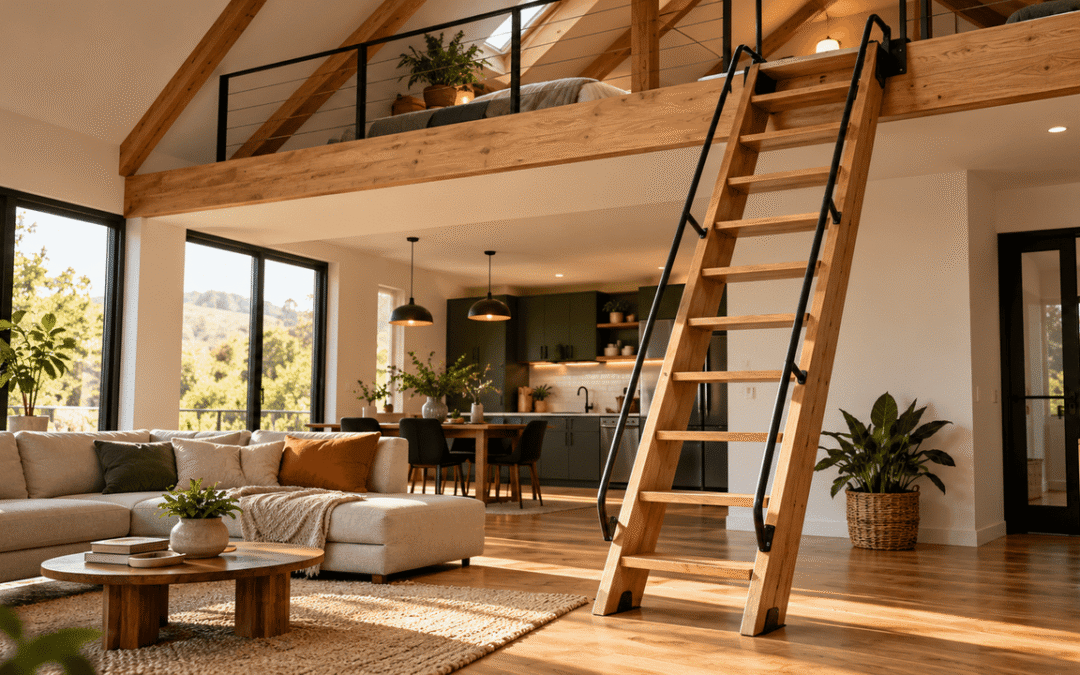
Every vertical space problem is also a design problem. Standard options fail. You’ve measured the floor-to-loft height, you’ve sketched the angles, and you’ve spent an afternoon scrolling through catalog options that were built for a generic room, not yours. The mass-market pull-down stairs flex underfoot. The pine kit from the hardware store doesn’t clear your header beam. The proportions are wrong, the finish is wrong, and none of it carries the visual weight that a permanent architectural element deserves.
A custom loft ladder, fabricated to your exact measurements from structural steel and hand-selected premium wood species, occupies a distinct architectural class. It arrives as a finished piece, welded, finished, and sized to the inch, integrating with your home the way a built-in bookcase or a custom staircase does: permanently, precisely, and without compromise.
Understanding the Investment: Custom Loft Ladder Price Ranges
The custom loft ladder cost you’ll encounter in the market divides sharply into two categories: modular DIY kits that you assemble yourself, and fully custom, precise-to-the-inch ladders that ship complete and require only final anchoring to your header.
For homeowners who want the aesthetic of a steel-and-wood ladder and are comfortable with self-assembly, a high-quality DIY retractable loft ladder kit: structural steel frame with poplar treads runs from $1,350 to $1,550. For a fully assembled, custom-built ladder engineered to your exact floor-to-loft height, pricing starts at $2,400 for a 7-foot model and scales to $2,760 for a 10-foot model. Custom-fabricated handrails start at $1,100 and complete the structural and visual picture.
Those numbers reflect something real about how these objects are made. Precision dictates safety. A mass-produced retail ladder is built to a generic height, which means the step spacing at the top or bottom of your climb is almost always uneven, a minor annoyance at first that becomes a genuine safety concern over years of daily use. A custom-engineered ladder is fabricated to your specific vertical measurement, so every step is equally spaced and the climbing angle is calibrated to your space. That precision also eliminates the hidden contractor costs that come with forcing a standard ladder into a non-standard opening: no ceiling modifications, no floor adjustments, no shimming.
Primary Cost Factors: Materials, Heights, and Upgrades
The materials you choose determine how the ladder feels underfoot, how it ages alongside your home, and how it reads visually in the room. Materials dictate longevity. Structural steel carries weight in both senses: it provides an unwavering rigidity that solid wood alone cannot match over a long span, and it anchors the piece visually as a permanent fixture rather than a removable accessory. Paired with hand-selected premium wood species treads, the combination produces something that functions like architecture and ages like furniture.
Height is the most direct pricing driver because it governs raw material volume and the structural engineering required to maintain rigidity across a longer span. A 7-foot ladder and a 10-foot ladder are not the same object at different scales; the taller configuration requires additional reinforcement to prevent any flex or torque along the frame. The investment tiers below reflect that engineering reality:
- 7 Foot Loft Ladder: Priced at $2,400, this height suits low-ceiling lofts, compact mezzanine spaces, and tiny homes where the floor-to-loft measurement falls in the shorter range.
- 8 Foot Loft Ladder: Priced at $2,540, this is the most common residential height and offers a comfortable climbing angle for standard-ceiling rooms.
- 9 Foot Loft Ladder: At $2,640, this configuration begins to require the additional structural reinforcement that keeps the frame silent and flex-free at full extension.
- 10 Foot Loft Ladder: Priced at $2,760, the tallest standard configuration, engineered for high-ceiling lofts and open-plan spaces with significant vertical clearance.
- Premium Wood Upgrades: Standard clear-coated poplar treads are included at the base price. Upgrading to white oak, red oak, or maple is available for an additional charge, which is a worthwhile consideration if you want the treads to match existing flooring or cabinetry.
- Custom Railings: Custom railings start at $1,100 and are fabricated to match the ladder’s structural steel frame, providing both the safety and the finished architectural look the piece deserves.
If you’re ready to move from planning to commissioning, explore the custom steel and wood loft ladder, which arrives fully assembled, built to your exact floor-to-loft measurements, and shipped free to your door. Contact Ted Amell at the Albuquerque workshop to discuss your dimensions, preferred wood species, and railing configuration.
Installation Dynamics: DIY Kits versus Professional Placement
A fully assembled custom ladder from Loft Living Room 62 sidesteps most of that. Installation is straightforward. The piece ships complete, welded, finished, and sized, meaning that securing it to your header requires only a handful of structural screws. Most homeowners with basic DIY confidence handle the final installation themselves in an afternoon. That reduction in professional installation time is a genuine cost offset against the ladder’s purchase price, and it’s worth accounting for when you’re comparing options.
Beyond the mechanical installation, there’s a thermal consideration that often goes unaddressed until after the work is done. According to the Energy Star Attic Insulation Guidelines, proper loft and attic access is critical because it allows homeowners and contractors to inspect insulation levels and perform necessary weatherization work. If your loft ladder connects to an unconditioned attic space rather than a conditioned living area, the access point itself can become a significant source of heat loss or gain. Sealing and insulating that opening is a step that belongs in your installation plan, not as an afterthought. The Energy Star Guide on Sealing Attic Hatches outlines the core methods for treating these openings as you would an exterior door.
Treating these access points requires a few specific steps:
- Weatherstripping the Edges: Apply high-quality adhesive weatherstripping around the full perimeter of the hatch or door frame to close off drafts at the contact line.
- Rigid Foam Board Insulation: Attach a piece of rigid foam board insulation to the back face of the hatch door, following the same principle you would apply to an exterior door, to add meaningful thermal resistance (per the Energy Star Guide on Sealing Attic Hatches).
- Pre-made Insulated Covers: For pull-down stair configurations, commercially available insulated covers are sold at most home improvement centers and online retailers; they seal the full opening effectively without custom fabrication (per the Energy Star Guide on Sealing Attic Hatches).
- According to the Energy Star Attic Air Sealing Project, attic hatches, pull-down stairs, and furnace flues are among the most common locations for attic air leaks: identifying and sealing these points during installation, rather than returning to address them later, is the more efficient path.
“Beautiful piece. Easy to install. Easy to use. And Ted was a wonderful seller to work with.” (Charlotte on Etsy)
Bespoke Configurations: Sliding and Retractable Track Systems
A static ladder solves the access problem, but in a tight loft or a room where floor space is acutely limited, it can also create one. Space is a premium. When the ladder rests at its climbing angle, it occupies a meaningful footprint, taking up floor area that might otherwise serve as a reading nook, a workspace, or simply an unobstructed path through the room.
A sliding track system addresses this directly. The ladder mounts to a top rail and stores flush against the wall when not in use, sliding out to its climbing position only when needed. The mechanism is smooth, the footprint when stored is essentially zero, and the visual effect, a lean steel-and-wood form resting against a wall, reads as a deliberate design choice rather than a functional compromise. Retractable mechanisms work on a similar principle, folding or retracting the ladder out of the active floor plane entirely. Both options carry a higher initial price than a fixed-mount configuration, but for the right space, the square footage they return is worth considerably more than the premium.
If the steel-and-wood aesthetic appeals but the budget calls for a more accessible entry point, the DIY retractable loft ladder kit starts at $1,350. The kit ships with a solid structural steel frame and premium poplar treads, matching the material quality of the fully custom line, in a self-assembled format that brings the cost down without sacrificing the artisan character of the finished piece.
Evaluating Value: What Drives Custom Loft Ladder Pricing?
When you’re weighing the investment, it helps to be precise about what you are paying for. The price difference between a mass-market pull-down stair and a custom-fabricated steel-and-wood ladder reflects three distinct factors:
- Precision Engineering: Every custom ladder is fabricated to your exact floor-to-loft height, which means equal step spacing across the full climb and a climbing angle calibrated to your room’s geometry. The safety implications of that precision compound over years of daily use.
- Artisanal Craftsmanship: Each ladder is hand-welded in the Loft Living Room 62 workshop in Albuquerque, producing a lasting installation that holds structural integrity without the creaking, flexing, or loosening that characterizes mass-produced alternatives.
- Material Honesty: Solid structural steel frames and hand-selected premium wood species like white oak or walnut produce what amounts to a functional sculpture, an object that serves a daily purpose and simultaneously refines the interior it occupies.
A mass-market ladder may appear cheaper at the point of purchase, but it often incurs downstream costs: ceiling joist modifications to accommodate a non-standard height, floor adjustments for an awkward climbing angle, or early replacement when the hardware fails. A custom-engineered ladder from Loft Living Room 62 arrives sized to your existing opening, which eliminates most of those contractor fees before they arise. The hand-welded structural steel frame does not loosen, does not warp, and does not require periodic tightening; it performs the same on year ten as it does on day one.
The customers who’ve lived with these ladders describe the experience more plainly than any spec sheet could:
Their feedback speaks volumes.
“This ladder is simply incredible. Ted was extremely responsive and provided updates throughout the timeline we discussed. Additionally, the minute it shipped we were alerted by Ted and it arrived quite quickly. The craftsmanship is 100% more impressive than I could have expected. Thank you… and everyone else… don’t hesitate, just commission it already.” (Dana on Etsy)
“Extremely nice loft ladder we are so happy with it. The workmanship and construction is top quality. Highly recommend this company. Good communication and fast response to questions. This was exactly what we were looking for for our loft.” (Adam on Etsy)
Frequently Asked Questions About Loft Ladder Pricing
What is the price difference between a wood and steel loft ladder?
Structural steel-framed ladders with solid wood treads offer the most durable long-term configuration. All-wood ladders can warp, creak, and loosen at the joinery over time, particularly in climates with significant humidity swings. The hand-welded structural steel frames from Loft Living Room 62 start at $2,400 and provide a silent, permanent structure that holds its geometry across decades. Upgrading the wood treads from standard clear-coated poplar to premium species like white oak or maple is available for an additional charge, allowing the ladder to match your existing flooring or cabinetry without compromising the structural steel frame’s performance.
Does shipping cost extra for a custom loft ladder?
No. Loft Living Room 62 includes free freight shipping on all custom-built 7 to 11 Foot Loft Ladders. The ladder ships fully assembled and securely packaged, arriving ready for immediate installation. That eliminates one of the more unpredictable variables in a custom fabrication budget: freight on large, heavy structural pieces can add hundreds of dollars when it isn’t included in the purchase price.
Can I install a custom loft ladder myself, or do I need a contractor?
Because the ladders ship fully assembled and are built to your exact measurements, the final installation is manageable for most homeowners with basic DIY skills, typically a matter of securing the piece to your header with structural screws. Where professional help becomes genuinely necessary is when you’re creating a new ceiling opening or modifying your home’s structural framing; in those cases, a licensed local contractor should handle the structural work before the ladder goes in.
How do I measure my space for a custom loft ladder?
The essential dimension is the vertical height from your finished floor to the top of your loft floor or header beam. You’ll also want to measure the available floor run, meaning the horizontal distance the ladder’s base will occupy, to confirm the climbing angle works for your space without obstructing walkways or furniture.
Are custom loft ladders safe for daily use?
Yes. The hand-welded structural steel frames and solid wood treads are built to carry heavy loads without flex, producing the same unwavering feel as a permanent staircase.
Commissioning a custom loft ladder is a collaborative design journey that begins with a single measurement and a conversation about your space. By choosing a precise-to-the-inch, hand-welded steel and wood ladder, you’re investing in a permanent architectural element, one that maximizes your usable square footage, provides daily structural safety, and integrates with your home’s design as though it was always meant to be there. Measure your floor-to-loft height, select your preferred wood species, and let Ted Amell fabricate a piece tailored precisely to your opening.
For personalized wood upgrades, custom powder coating, or unique spatial configurations, contact Dorette or Ted Amell at 207-699-7396 or visit the workshop at 3612 High Street NE in Albuquerque.